Conductive Loss
Mechanical Block
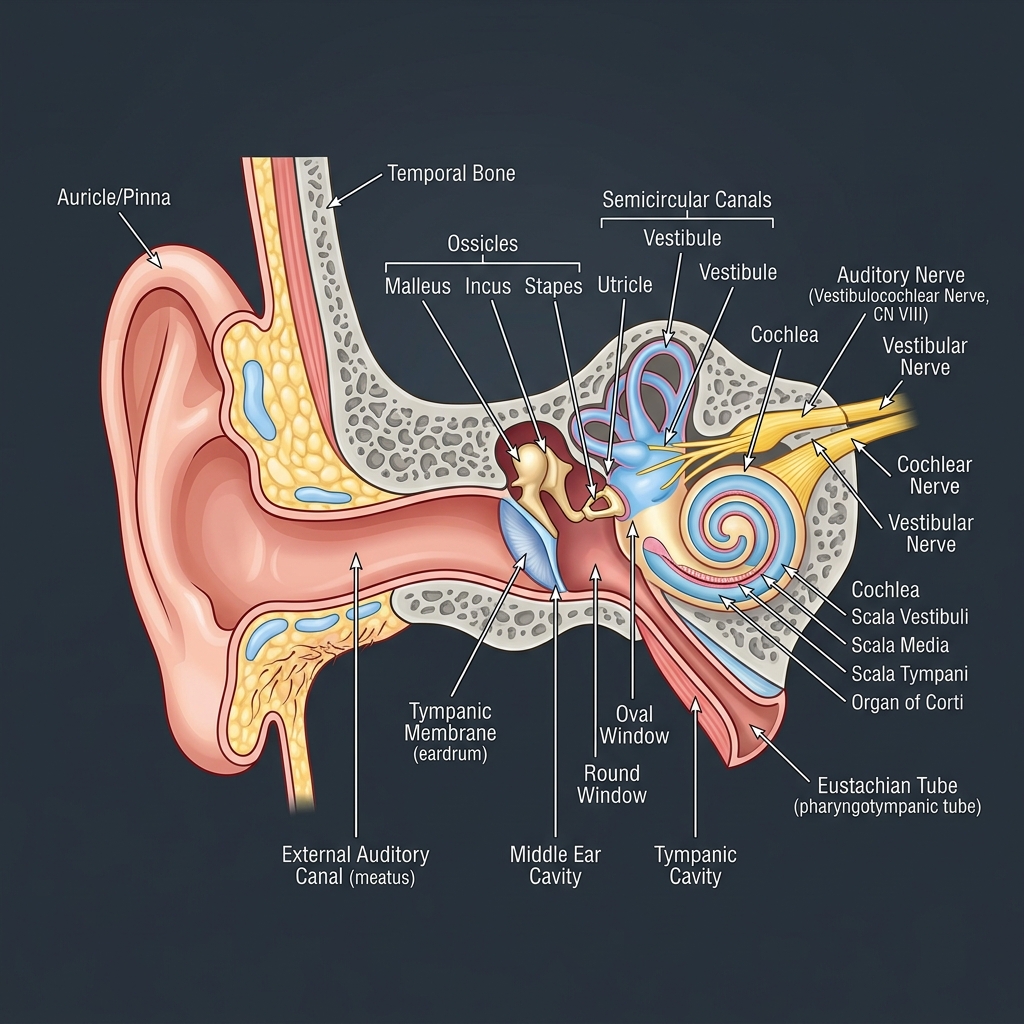
Occurs when sound waves cannot travel efficiently through the outer ear canal or middle ear ossicle bones. Often caused by temporary fluid behind the eardrum, allergies, earwax plug, or structural issues.
💡 Teacher Impact: Sound is muffled but clarity remains if turned up. Standard hearing aids or sound fields provide immediate, highly successful relief.
Sensorineural Loss
Sensory Damage
The most common permanent type, caused by damage to the tiny hair cells inside the inner ear cochlea or the auditory nerve fibers. Sounds are both quieter AND highly distorted (missing high frequency clarity).
💡 Teacher Impact: Raising your voice does NOT fix the distortion! Personal Roger wireless mics are essential to deliver crisp high frequencies straight to their aids.
Mixed Loss
Combined Pathway
A combination of conductive and sensorineural components. For example, a student with permanent genetic inner-ear hair cell damage who also has active fluid congestion/middle ear blockage from a cold.
💡 Teacher Impact: Hearing thresholds drop significantly during fluid flareups. The student will struggle far more than usual and needs immediate checkins.
Auditory Neuropathy
Scrambled Signal
Auditory Neuropathy Spectrum Disorder (ANSD) occurs when sound enters the ear normally, but the transmission of electrical signals along the auditory nerve to the brain is disorganized or out of sync.
💡 Teacher Impact: Sound is present, but speech is completely scrambled (like a radio out of tune). **Absolute silence** in background acoustics is imperative for comprehension.